Classic Design Lessons: What Free-To-Play Can Learn From Arcades
I worked on the coin-op videogames industry for 13 years, as a Graphic Artist and Game Designer. I worked on and created several videogames, some of them quite successful.
As my game development career moved forward, I shifted to mobile gaming, console gaming and, currently, on the production of a PC Free2Play shooter game. During the production and beta testing phase, I found some similarities between coin-op and F2P games regarding how the player approaches the game and how the game approaches the player. This article tries to explain these psychological and game dynamics.
The First Experience
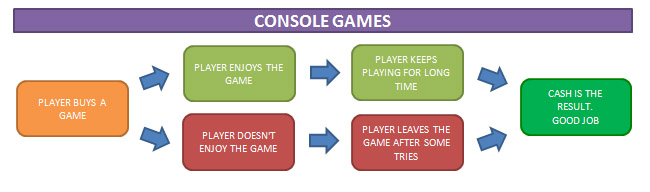
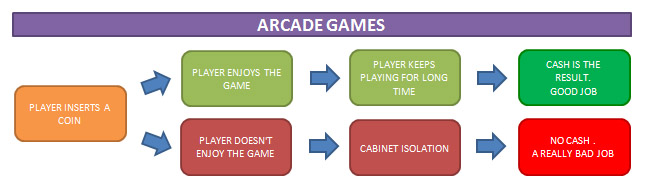
When the player buys a game and plays it for the first time, two things can happen: the player enjoys the game and keeps playing, or the player doesn't enjoy it and eventually gives up. In both cases, the publisher has sold the game and made their money.
On coin-op and F2P games, player reaction during the first experience is different. If the player enjoys a coin-op game, they keep inserting coins for days, weeks or months. On F2P, the player keeps playing for free — and a small percentage (3–5%) will buy virtual goods to enhance their experience.
But what if the player has a bad first experience? On coin-op, they move away from the cabinet, and bad word spreads fast. On F2P, the player immediately quits and looks for another game — because it cost them nothing, they feel no obligation to give it another chance.
That's why, on both coin-op and F2P, the player's first experience needs to be absolutely great. It can't be confusing, annoying or frustrating — it has to be perfect, because if not, it leads the player to quit.
Replayability
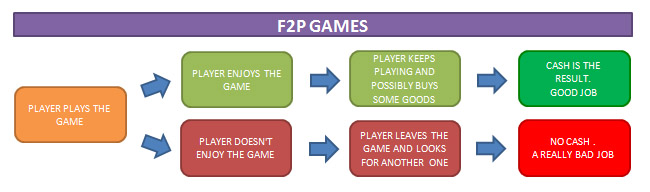
On most games you buy in a shop, replayability is not a primary feature. The opposite happens on coin-op games, where each level will be played hundreds of times by the same player — especially starting levels, which the player must master to progress. These levels have to be thoroughly designed and perfect on every centimetre gameplay-wise.
Levels can't have dead zones, a wrong collision, a section that isn't fun, or a missed opportunity. If something can be improved but hasn't been, the player will eventually get bored or annoyed — and that's enough reason to stop playing. On coin-op, cash doesn't come when the player buys the game, but only after they've been playing for a while.
The same applies to F2P games (especially shooters). The player plays each map thousands of times across different modes, so everything has to be perfect — because any flaw means the player leaving to spend their money elsewhere.
Dynamic Difficulty
One feature we added to coin-op games was automatic difficulty adjustment to match the player's skill level. We constantly measured player performance and compared it against data from a perfect run. This let us know the player's level after the first 5–10 seconds and adjust a few parameters accordingly — keeping the game "not too easy, not too difficult".
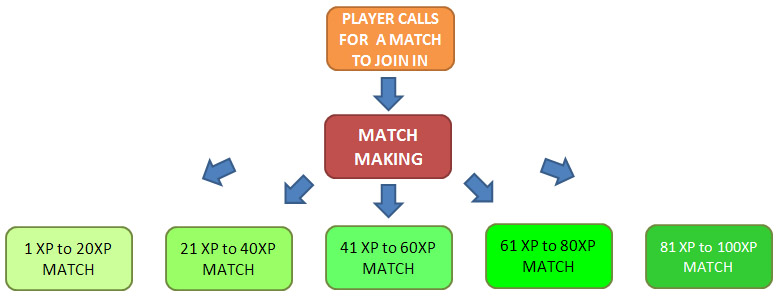
F2P games do the same through matchmaking — finding opponents of similar skill level so every match feels balanced and rewarding.
Monetization
There is a clear similarity between "insert another coin to continue" and "buy a more powerful weapon to defeat that player who keeps beating you." Both are cheap (1€ per credit on coin-op; €0.50–€6 for virtual goods on F2P), impulsive (you reach for the coin in a panic as the countdown ticks; you storm into the shop in a rage after being killed repeatedly), and satisfying (you instantly get what you need — progress, or revenge).
Beta Testing
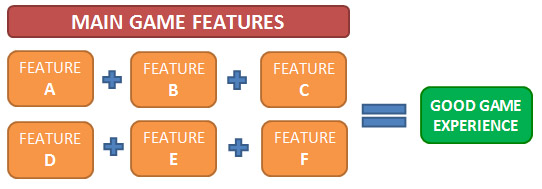
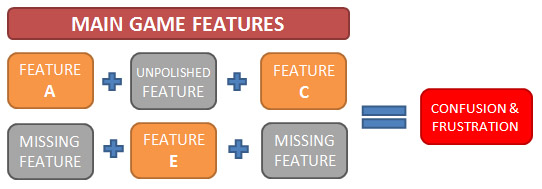
Coin-op and F2P games also share beta testing challenges. Above all, when beta testing, almost all game features must be in place. Testing an incomplete game gives results that don't reflect the finished experience.
On coin-op, we beta tested by placing a cabinet in a selected arcade for a few weeks. You can't test a game that isn't nearly feature-complete — confused or frustrated players will abandon the cabinet and it "burns up". The solution: tweak the game and find a new arcade for the next test.
On F2P, conditions are similar but the stakes are higher — the "arcade" is the entire world. If the audience doesn't like the game, there's no new world to try again. The most valuable thing in any beta test is the player's first impression. After a week, players become "intoxicated" by the game and their feedback loses freshness.
Conclusion
This article reflects thoughts from my past experiences in the games industry — real sensations I had during the Freak Wars: Torrente Online 2 production, when I constantly had déjà vu moments recalling those splendid days working at Gaelco.
These similarities won't cover every parallel between coin-op and F2P — or even other game types — but that's a story open for anyone to add their two cents.
Special thanks to Abel Bascuñana for his guidance and help.